0% Balance Transfer Ending Soon: When to Switch Your Payments
Eighteen months ago, a borrower transferred $12,000 from high-interest cards to a 0% introductory APR balance transfer card, paying a 3% upfront fee ($360). They made consistent payments and significantly reduced the principal. But with 90 days remaining on the promotional period, a balance of $6,500 remains.
Their regular monthly debt budget allows for $700 in extra cash flow. Once the 0% promotion expires, the card’s standard variable rate will jump to 27.99% APR. The borrower asks: “Can I afford to let the remaining balance roll over into regular APR, or do I need to find extra cash to wipe it out now? When exactly does the bank start charging interest, and what is my best escape plan if I cannot clear the full $6,500?”
Using a retail store card or medical financing plan instead of a standard bank card? Read our guide on deferred interest vs. 0% APR before your promo expires so you do not get hit with backdated interest.
The Direct Answer in the First 100 Words
When your 0% balance transfer promotion is 60 to 90 days from expiring, you must determine whether your remaining balance can reach zero before the promotional clock runs out. If you cannot clear the balance with your normal surplus, you should switch your debt payoff focus to this card immediately to sprint toward zero, or initiate a secondary balance transfer or personal loan 30 to 45 days before the deadline.
Never aim for your monthly statement due date. Always set your target payoff date 10 to 14 days before the official expiration date to account for billing cycle timing and bank processing delays.
The Rate Cliff: What Happens When the 0% Window Closes
When a promotional rate ends, your credit card does not offer a grace period on the remaining balance. On Day 1 following the expiration date, the remaining balance immediately begins accruing interest at the card’s standard purchase or balance transfer APR, which typically ranges from 24% to 29.99%.
In our real-world case study with $4,400 remaining after applying three months of $700 payments:
- Daily Interest Bleed: At 27.99% APR, an unpaid balance of $4,400 starts charging $3.37 per day in compounding interest ($102.63 in month one).
- The Minimum Payment Trap: If you drop back to paying minimums on that $4,400 balance, you will spend 16 years in debt and pay $8,411.73 in interest alone on what was once an interest-free balance.
- The Accelerated Exit: If you continue throwing your full $700 monthly surplus at the $4,400 balance, you will clear it in 7 additional months, paying approximately $414 in total interest.
Most standard major credit cards offer true 0% APR, meaning interest only begins accruing on the unpaid remaining balance starting on the expiration date. In contrast, retail store cards and medical financing often use deferred interest, where failing to pay off 100% of the balance by the deadline triggers retroactive interest backdated to Day 1 on the full original transfer amount. Always read your statement to confirm which promotion you have.
The 4-Option Decision Matrix for an Expiring Promotion
When looking at your remaining balance 60 to 90 days out, evaluate your situation against these four strategic options:
| Strategy | Monthly Requirement | Payoff Time | Upfront Fee | Total Interest Paid |
|---|---|---|---|---|
| Option 1: The 90-Day Sprint Temporary budget squeeze to reach $0 before deadline |
$2,166.67/mo | 3 months | $0.00 | $0.00 |
| Option 2: Secondary Balance Transfer Rolls remaining $4,400 to a new 0% card with 4% fee |
$700.00/mo | 7 months | $176.00 | $0.00 |
| Option 3: Controlled Rollover Payoff Allows $4,400 to roll into 27.99% APR, maintains $700/mo |
$700.00/mo | 10 months total | $0.00 | $414.16 |
| Option 4: Minimum Payment Rollover Reverts to standard minimum payments after promo |
Starts at $130/mo | 192 months | $0.00 | $8,411.73 |
Evaluating Option 2 vs. Option 3: The Transfer Fee Math
Borrowers frequently wonder if doing a second balance transfer makes sense when only a modest balance remains.
Here is the exact rule: compare the upfront transfer fee (usually 3% to 5%) to the total interest you would pay by aggressively clearing the debt on standard APR:
- A 4% transfer fee on $4,400 equals $176.00.
- If you have $700 per month to throw at the remaining balance, paying standard 27.99% APR over 7 months costs $414.16 in interest.
- Executing the second balance transfer saves you $238.16 in net cash ($414.16 minus $176.00).
If you can pay off the remaining balance within two or three months of expiration, the transfer fee is roughly equal to the interest paid, making a second transfer unnecessary paperwork. But if paying off the remaining balance will take six months or longer, transferring to a new 0% promotion is almost always mathematically superior.
The 90-Day Execution Timeline: Exactly When to Act
Managing an expiring balance transfer requires a methodical timeline. Do not wait until the final statement arrives:
Audit the Exact Expiration Date
Log into your online account and open your latest PDF statement. Look for the section labeled “Promotional Balances and APRs.” Note the exact expiration date, which is frequently different from your regular payment due date. Calculate your remaining balance divided by your monthly cash flow to see if a gap exists.
Choose Your Strategy (Sprint vs. Pivot)
If your payoff gap is small (for example, you need an extra $200 per month for two months), cut non-essential spending or allocate temporary side income to sprint across the finish line. If the gap is thousands of dollars, research secondary 0% cards or low-interest credit union personal loans now.
Submit Secondary Applications
Balance transfers between institutions take 7 to 14 business days to process and settle. If you plan to transfer the remaining balance to a new card, submit the application at least 30 days before your current promo expires to prevent processing delays from pushing your balance past the cutoff.
Execute Your Final Zero-Balance Payment
Schedule your final payoff payment to clear at least 10 to 14 business days before the promotional end date. This shields you from weekend delays, bank holidays, and billing cutoff discrepancies.
Three Common Balance Transfer Traps to Avoid
1. The Loss of Grace Period on New Purchases
Most credit card agreements state that to receive an interest-free grace period on new purchases, your account must have a $0 balance at the end of the billing cycle. If you carry a balance transfer on a card, any new purchases you make with that card start accruing interest immediately from the day of the swipe, even if your balance transfer is at 0%. Never use an active balance transfer card for everyday spending.
2. The Statement Date vs. Expiration Date Confusion
Promotional APRs expire on a specific calendar date (for example, November 14th), while your billing cycle might close on November 28th. If your promotion ends mid-cycle, interest begins accruing on November 15th for every day remaining in that billing cycle.
3. The Multiple-Card Sequencing Dilemma
If you have multiple debts, you might wonder whether you should direct extra payments to a 0% card that is expiring soon, or to a separate card that is currently charging 28% interest.
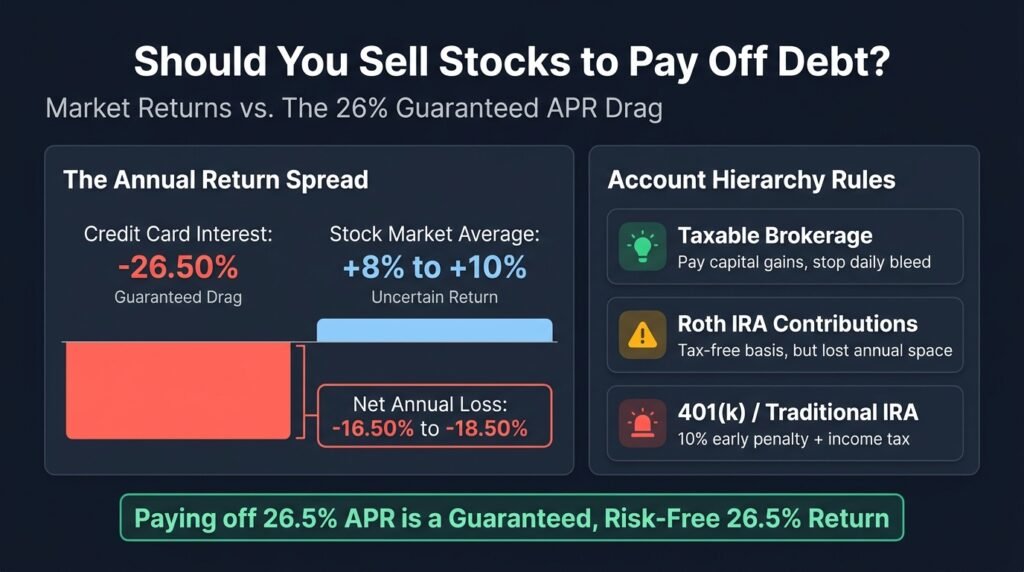
As our calculations show, extra money should always attack active high-APR balances first. However, once the expiring 0% card crosses its deadline, its interest rate matches or exceeds your other cards. The moment the rate changes, your sequencing must immediately redirect surplus funds to the newly exposed balance. Review our guide on Why Paying Extra on Every Card Doesn’t Work (and the Fix) to see how focused sequencing prevents cash-flow dilution.
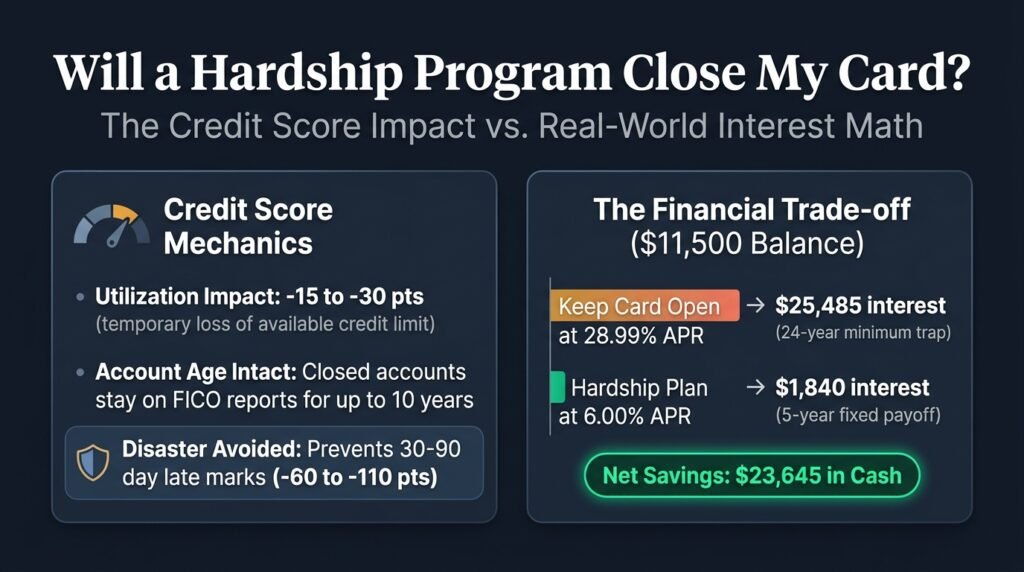
If you find yourself unable to pay the minimum payments or secure a secondary transfer, consider calling your card issuer to request an internal repayment program. Read our guide on Credit Card Hardship Programs and our analysis on Will a Hardship Program Close My Account? for scripts and trade-offs.
Track Promotional Clocks and Payoff Timelines in LEVEL
Balancing 0% promotional expiration dates alongside variable credit card balances is difficult on paper. Missing a promotional date by a single week can cost hundreds of dollars in unexpected interest.
LEVEL is an independent, zero-bank-sync debt payoff tool that models promotional APR cliffs, calculates daily interest bleed, and builds deterministic Snowball and Avalanche payoff schedules.
Frequently Asked Questions
What happens if I don’t pay off a 0% balance transfer in time?
On standard credit cards, interest immediately begins accruing on the remaining unpaid balance at the card’s regular variable APR (typically 24% to 29.99%) from the day the promotion ends forward. You do not pay interest on the portions you already paid off. However, on store cards with deferred interest, failing to pay the entire balance triggers retroactive interest on the full original amount.
Can I do another balance transfer to a new 0% card?
Yes, you can transfer an unpaid balance to a new 0% card, provided your credit score qualifies you for approval and you transfer to a different card issuer (banks do not permit balance transfers between accounts within the same institution). You will typically pay an upfront balance transfer fee of 3% to 5% of the transferred amount.
Can I pay off my 0% balance transfer early without penalty?
Yes. Credit card issuers in the United States do not charge prepayment penalties. Paying off your balance early eliminates the risk of missing your promotional expiration date and immediately restores your available credit limit.
Does transferring a balance hurt my credit score?
Applying for a new balance transfer card creates a small temporary hard inquiry (typically 5 points or less). However, moving high-utilization debt onto a new credit line increases your total available credit, which often lowers your overall revolving credit utilization and can benefit your credit score over time as you pay down the principal.