
Software Architecture / Execution Systems
Debt Payoff Planner: How to Build a 12-Month Blueprint (Without Bank Sync)
Your debt calculator isn’t broken. Your finish line is invisible. Most people trying to get out of debt spend hours cataloging coffee receipts in budgeting apps, yet still have no idea which exact month their last credit card balance hits zero.
When borrowers search for a debt payoff planner or debt payoff app, they usually get steered toward traditional zero-based budgeting software (like YNAB) or complex 10-tab spreadsheets (as covered in our guide on why to ditch the debt payoff spreadsheet). But budgeting is backwards-looking bookkeeping: it obsessively records where your money went last week. A true debt planner is an architectural forward-looking engine: it dictates exactly where your capital must go next month to destroy interest bleed.
To eliminate high-interest balances permanently, you don’t need another app harvesting your bank credentials through Plaid. You need a dedicated, private 12-month visual construction blueprint that aligns mathematical interest reduction with psychological momentum.
Budgeting App vs. Debt Payoff Planner: The Critical Distinction
The number one mistake borrowers make when trying to eliminate multiple credit cards is using an expense-tracking tool to solve a mathematical sequencing problem.
| Capability | Standard Budgeting Apps (YNAB, Mint) | Static Spreadsheets (Excel, Google Sheets) | Architectural Debt Planner (LEVEL) |
|---|---|---|---|
| Core Objective | Expense categorization & receipt tracking | Manual ledger calculation | Exact Debt-Free Date & Interest Optimization |
| Bank Syncing Required? | Mandatory (Plaid / OAuth logins) | No (Manual entry) | Zero (100% Private & Confidential) |
| Strategy Comparison | None (Assumes static payments) | Rigid Snowball or Avalanche only | Snowball, Avalanche, & Dynamic Blitz |
| Extra Payment Simulation | Category reallocations only | Requires rebuilding formulas | Real-Time Interactive What-If Simulator |
| Visual Milestone Tracking | Monthly expense pie charts | Static balance line graphs | 12-Month Interactive Construction Bricks |
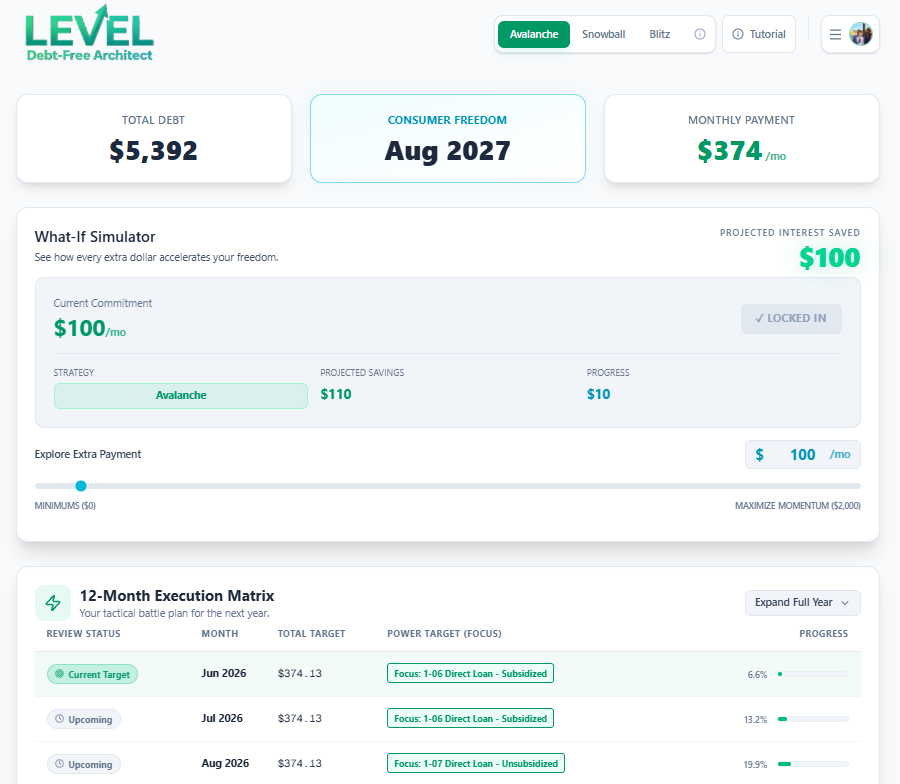
Figure 1: The LEVEL 12-month construction blueprint turning abstract balances into tangible, sequential progress milestones.
4 Pillars of a High-Performance Debt Payoff Planner
To collapse your repayment timeline and avoid decision fatigue, an architectural debt planner must satisfy four engineering criteria:
Pillar 01
Zero Bank Sync (Deliberate Privacy)
You should never surrender your banking passwords or transaction history just to map out math. Manual entry requires only 3 numbers per debt—balance, APR, and minimum—keeping your financial architecture 100% confidential.
Pillar 02
Multi-Strategy Side-by-Side Modeling
A static tool locks you into one dogma. A modern engine models the Debt Snowball (quick emotional wins), Avalanche (pure APR math), and Dynamic Blitz (daily interest dollar attack) side by side.
Pillar 03
Interactive What-If Simulation
When you earn a \$500 bonus or cut a \$150 subscription, you shouldn’t guess its impact. The planner must instantly calculate how that capital pulls your debt-free date forward in real time.
Pillar 04
Visual Construction Milestone Roadmap
Carrying 5 credit cards runs 5 background apps in your brain. A visual 12-month brick blueprint transforms overwhelming liabilities into discrete physical milestones you can complete and celebrate.
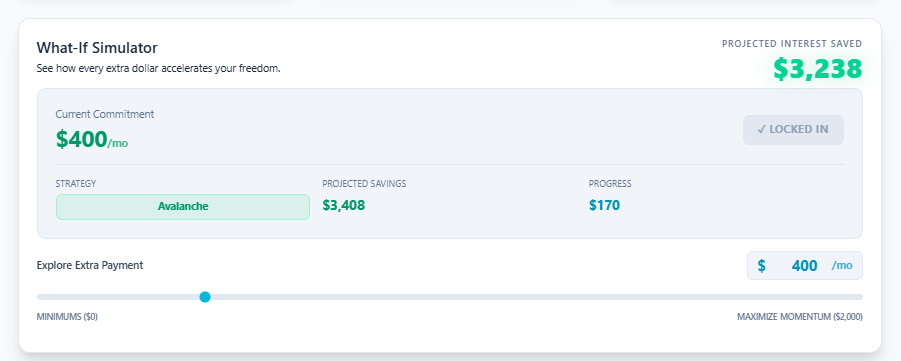
Figure 2: Real-time What-If simulator modeling recurring surplus and lump-sum injections across multi-account liabilities.
How to Build Your 12-Month Payoff Blueprint in 4 Steps
Executing an architectural debt payoff plan requires less than 5 minutes a month once the framework is established:
1. Audit Your Current Daily Dollar Bleed
List each account’s current balance and APR. Multiply each balance by (APR ÷ 365) to reveal your daily interest leak in actual cash dollars (as detailed in how to calculate daily interest bleed).
2. Select Your Repayment Engine
If you need immediate psychological relief, choose Snowball to eliminate small cards first. If you want maximum interest efficiency, choose Blitz to attack the cards draining the most daily interest dollars.
3. Stress-Test with the What-If Simulator
Model adding \$100, \$250, or \$500 per month in surplus payments. See your exact payoff month pull forward on the timeline and lock in your target finish line.
4. Execute and Lay Your Monthly Bricks
Once a month, check off your completed payments on your visual roadmap. When an account hits zero, roll its entire payment into the next target (see how payment cascading works).

Figure 3: Multi-strategy matrix comparing Snowball, Avalanche, and Dynamic Blitz engines side by side.
Why Privacy is a Competitive Advantage in Debt Architecture
In the fintech world, users have been conditioned to believe that convenience requires surrendering bank credentials to aggregators. But Plaid-linked budgeting apps suffer from chronic token disconnects, delayed transaction feeds, and security vulnerability.
More importantly, automated bank sync encourages passive spectator behavior: you watch transactions post after the fact. A high-performance debt payoff planner is an active engineering blueprint. Spending 3 minutes once a month to manually enter your updated balances forces deliberate awareness, creates agency, and keeps your private financial data completely off third-party data broker servers.
Frequently Asked Questions
What makes a debt payoff planner different from a spreadsheet?
Can I switch strategies midway through my payoff plan?
Does LEVEL require linking my checking or credit card accounts?
Can I export my 12-month payoff blueprint?
Architectural Debt Payoff Planning
Stop budgeting backwards. Architect your finish line.
Build your custom 12-month payoff roadmap today on LEVEL Debt-Free Architect. Compare Snowball, Avalanche, and Dynamic Blitz side by side, simulate extra payments in real time, and see the exact month you reach zero—100% free to start, with zero bank sync required.