
High-Income Amortization / Cash Flow Routing
Why High Earners Get Trapped in Debt (And How to Escape)
Earning $150,000 to $300,000 a year feels like you should have complete financial peace. Yet thousands of high-earning professionals find themselves carrying $30,000 to $60,000 across multiple credit cards—wondering how a six-figure income still leaves them running on an interest treadmill.
If you are searching for how to pay off multiple credit cards with high income, you do not need generic advice like “stop buying lattes” or rigid snowball rules designed for modest budgets. High earners do not have an income problem; they have an amortization sequencing problem.
When you earn substantial income, your monthly cash flow is powerful enough to wipe out debt in months rather than decades. But if that cash is scattered randomly across cards while daily compounding interest drains hundreds every 24 hours (as detailed in our guide on calculating daily interest bleed), you stay trapped. Here is the mathematical blueprint to route your surplus cash flow and engineer your path to zero.
The 3 Reasons High Earners Stay Stuck in Credit Card Debt
Why do doctors, tech engineers, lawyers, and corporate executives get trapped in high-APR credit card debt? It usually boils down to three structural dynamics:
The High-Earner Anatomy
Why Earning More Doesn’t Automatically Fix Debt
1. The Professional Transition Hangover: Many high earners spend years with low cash flow during medical residency, law school, or startup founding. Credit cards bridge the gap. When the six-figure salary finally hits, existing balances remain locked in 24%–29% APR accounts.
2. The “Peanut Butter” Payment Mistake: When extra cash arrives, high earners tend to spread it thinly across all cards—sending $500 extra to Card A, $500 to Card B, and $500 to Card C. This dilutes mathematical impact. Compounding interest continues chewing up principal on every account simultaneously.
3. Fear of Asking for Help: High earners feel immense psychological shame about carrying debt. Instead of using a structured tool, they consider risky consolidation loans (see consolidation loans vs. paying one by one) or let balances linger on auto-pay minimums.
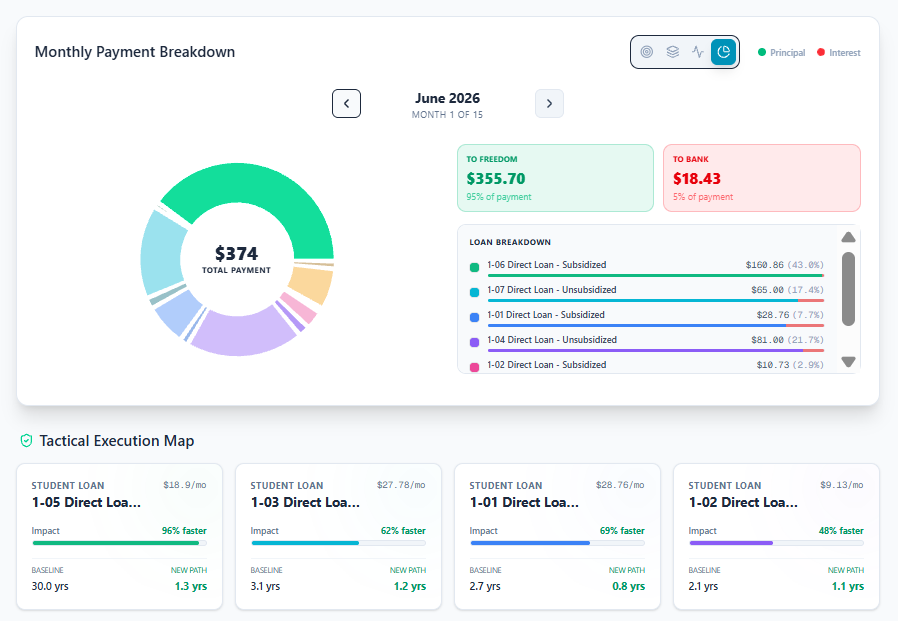
Figure 1: How daily interest quietly absorbs thousands of dollars in high-earner cash flow every month.
Case Study: A $220k Household Tackling $38,000 Across 4 Cards
To see how cash flow routing changes the trajectory, consider a household earning $220,000 gross (~$12,500/mo net take-home) carrying $38,000 across 4 credit cards with $4,500/mo in living expenses and $5,000/mo in potential debt firepower:
- Card 1 (Store Financing): $4,000 @ 29.99% APR ($120 min | Expiring promo)
- Card 2 (Chase Sapphire): $16,000 @ 26.49% APR ($420 min | $11.61/day bleed)
- Card 3 (Amex Everyday): $11,000 @ 23.99% APR ($280 min | $7.23/day bleed)
- Card 4 (Credit Union Visa): $7,000 @ 15.99% APR ($160 min | $3.07/day bleed)
| Repayment Approach | Monthly Firepower | Debt-Free Timeline | Total Interest Paid | Total Financial Outcome |
|---|---|---|---|---|
| 1. Minimum Payments (The Trap) | $980 / month | 24.2 Years | $31,240 | Full 24-year interest sentence |
| 2. Peanut Butter (Scattered Extra) | $3,500 / month | 14 Months | $4,650 | Saves $26,590, but leaves high APR exposed |
| 3. Cash Flow Routing (Blitz Protocol) | $3,500 / month | 11.5 Months | $3,180 | Debt-Free in under 1 year ($28,060 Saved!) |
By shifting from scattered payments to concentrated Cash Flow Routing, this household eliminates all $38,000 in under 12 months, defuses expiring promotional terms (see deferred interest traps), and saves over $28,000 in pure cash.

Figure 2: Comparing concentrated dynamic routing against traditional linear debt payoff methods.
The 4-Step Cash Flow Routing Sequence for High Earners
Step 1: Calculate Your Monthly Surplus Firepower
Take your net take-home pay and subtract fixed essential expenses (mortgage/rent, utilities, childcare, insurance, groceries). If your take-home is $12,000 and fixed overhead is $7,000, you have $5,000 of monthly firepower. Treat that $5,000 as a non-negotiable debt attack fund.
Step 2: Automate Minimums on All Secondary Accounts
Put contractual minimum payments on auto-pay across 3 of your cards. This protects your credit score, avoids penalty APRs, and ensures you never incur late fees (as detailed in how to escape the minimum payment trap).
Step 3: Direct 100% of Surplus to the Primary Daily Bleed
Calculate which card is leaking the most daily interest dollars using `Balance × APR ÷ 365`. Funnel the entirety of your surplus cash into that single account. Concentrating $3,000 to $5,000 a month on one balance destroys a $15,000 card in roughly 90 days.
Step 4: Execute the Cascading Surplus Roll
Once Card 1 is eliminated, its minimum payment rolls directly into your surplus pool. Your monthly firepower increases with every knocked-out balance, compounding your payoff speed across a 30k multi-card portfolio.
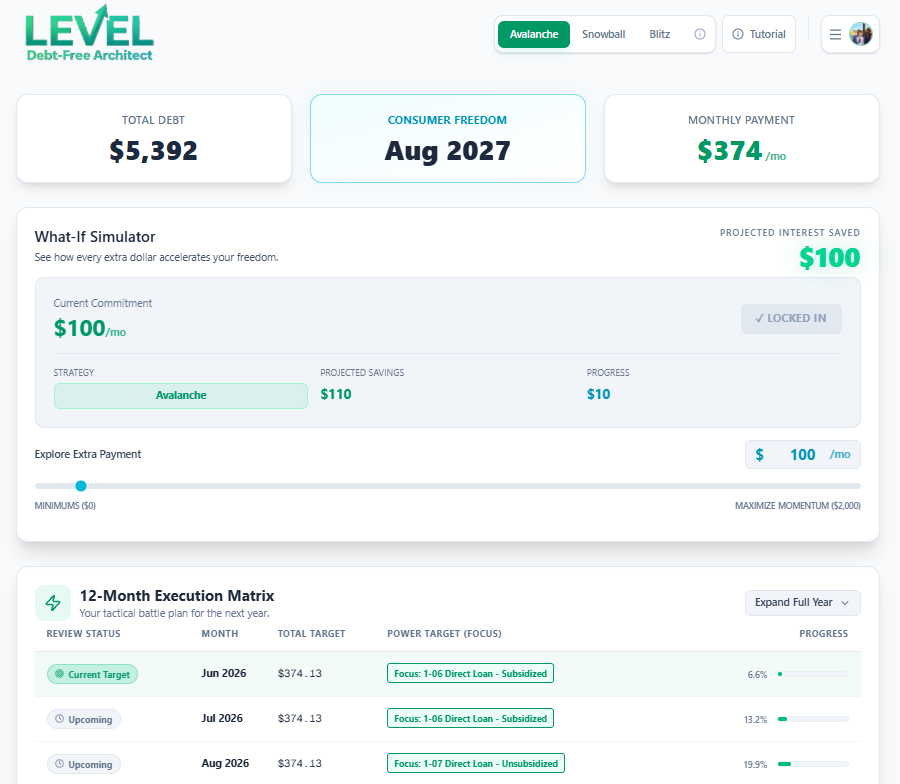
Figure 3: Tracking sequential cash flow milestones on an interactive 12-month visual roadmap.
Frequently Asked Questions
Should high earners pause retirement contributions (401k) to pay off credit cards?
Why does the Dave Ramsey Snowball method fail for high earners?
How can I test different monthly surplus scenarios privately?
Interactive Cash Flow Routing Blueprint
Turn six-figure income into debt-free reality.
Model your custom high-income payoff sequence today with LEVEL Debt-Free Architect. Simulate extra payment injections, compare Snowball vs. Avalanche vs. Dynamic Blitz side-by-side, and build your visual 12-month construction roadmap—100% private, with zero bank sync required.