
Banking Formulas / Credit Card Mathematics
Average Daily Balance Calculator: How to Calculate ADB
When you open your monthly credit card statement and examine the finance charges, the math rarely matches a simple percentage of your ending balance. That is because virtually all major banks use the Average Daily Balance (ADB) method to determine your monthly interest fee.
If you are looking for an average daily balance calculator or trying to understand how to calculate average daily balance by hand, you need to see the exact ledger formula banks use under Federal Reserve Regulation Z.
Calculating your average daily balance is not just an academic exercise: understanding this calculation is the key to uncovering your daily interest bleed and discovering why making mid-cycle payments saves significantly more money than waiting for your statement due date (as proven in our breakdown of the daily balance method).
The Average Daily Balance (ADB) Formula
To calculate your average daily balance and resulting monthly finance charge, card issuers apply a two-step formula:
Formula 1: Average Daily Balance (ADB)
ADB = (Sum of Each Day's Ending Balance) ÷ (Number of Days in Cycle)
Formula 2: Monthly Finance Charge ($)
Interest Charge = ADB × (APR ÷ 365) × (Number of Days in Cycle)
Here, (APR ÷ 365) is your Daily Periodic Rate (DPR). For example, a credit card with a 24.99% APR has a DPR of 0.06847% per day.
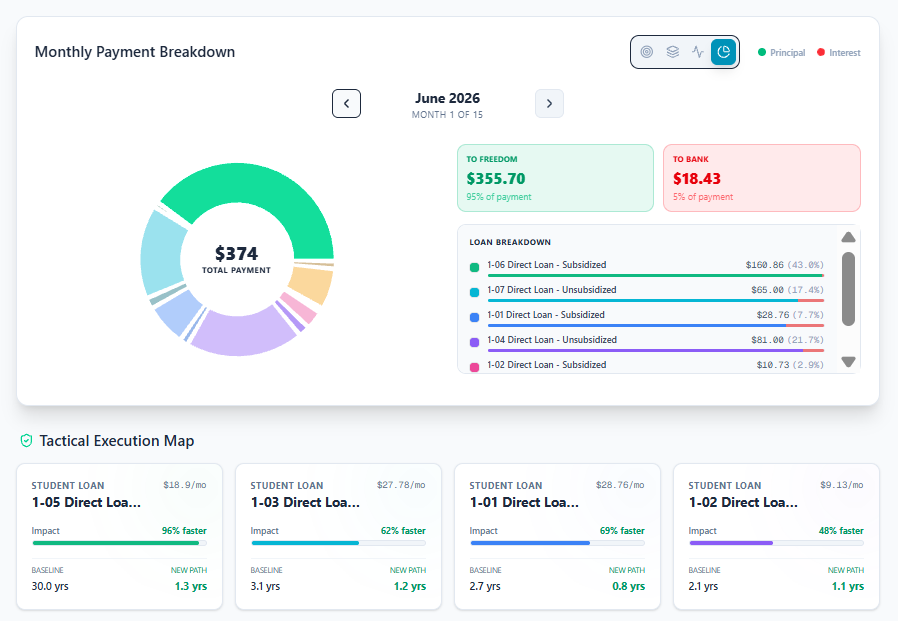
Figure 1: Visualizing how the average daily balance method compounds finance charges throughout a 30-day billing cycle.
Step-by-Step Ledger Example: A 30-Day Billing Cycle
To see how daily transactions directly manipulate your average daily balance, look at a representative 30-day cycle for a cardholder carrying an initial balance of $6,000 at 24.99% APR:
| Cycle Days | Day Count | Account Activity | Daily Ending Balance | Weighted Cumulative Balance |
|---|---|---|---|---|
| Days 1 – 6 | 6 Days | Starting Balance | $6,000.00 | $36,000.00 |
| Days 7 – 14 | 8 Days | +$600 Grocery/Gas Charges | $6,600.00 | $52,800.00 |
| Days 15 – 22 | 8 Days | -$2,000 Payment Posted | $4,600.00 | $36,800.00 |
| Days 23 – 30 | 8 Days | +$400 Utility Charge | $5,000.00 | $40,000.00 |
| Full 30-Day Cycle | 30 Days | Total Sum of Daily Balances | — | $165,600.00 |
Now calculate the Average Daily Balance:
ADB = $165,600 ÷ 30 Days = $5,520.00
Next, calculate the Monthly Interest Charge:
Interest = $5,520.00 × (0.2499 ÷ 365) × 30 = $113.38
Even though the statement ended with a $5,000 balance, the bank charged interest on an average daily balance of $5,520 because the balance was higher during the first half of the month.
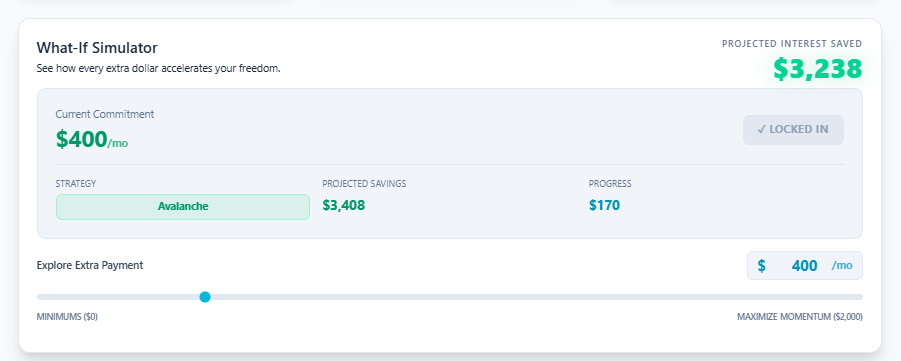
Figure 2: Testing what-if payment timing and surplus allocations to suppress your average daily balance.
How Payment Timing Alters Your Average Daily Balance
The single most powerful insight from the average daily balance method is that when you pay matters just as much as how much you pay.
Scenario A: Paying on Day 28 (Due Date)
The Due Date Trap
If you wait until Day 28 to make a $2,000 payment, the bank calculates interest on the higher $6,000 balance for 27 days. Your ADB remains elevated, costing you maximum finance charges.
Scenario B: Paying on Day 5 (Mid-Cycle)
The Mid-Cycle Attack
If you make that same $2,000 payment on Day 5, your daily balance drops to $4,000 for 25 full days. Your ADB drops by over $1,600, instantly slashing monthly interest charges.
This is why borrowers managing multiple credit cards benefit immensely from using a dynamic debt payoff calculator with extra payments. Making bi-weekly or mid-month payments right when paychecks deposit constantly suppresses your ADB.

Figure 3: Routing cash flow dynamically to accounts with the largest average daily balance interest drain.
Average Daily Balance: Credit Cards vs. Savings Accounts
While the average daily balance method is most famous for calculating credit card interest, banks also use it for high-yield savings accounts and money market accounts:
On Credit Cards (Interest Works Against You)
The bank charges you interest based on your average daily debt balance. The higher your ADB, the more money is siphoned out of your pocket every month (see how minimum payments trap borrowers).
On Savings Accounts (Interest Works For You)
The bank pays you interest (Annual Percentage Yield) based on your average daily deposit balance. Depositing funds early in the month increases your ADB and boosts your monthly interest payout.
On Collateral & Personal Loans
Most personal and collateral installment loans use a simple daily interest amortizing schedule rather than revolving ADB. Consolidating high-ADB credit cards into a personal loan changes your amortization mechanics (see consolidation loans vs. paying one by one).
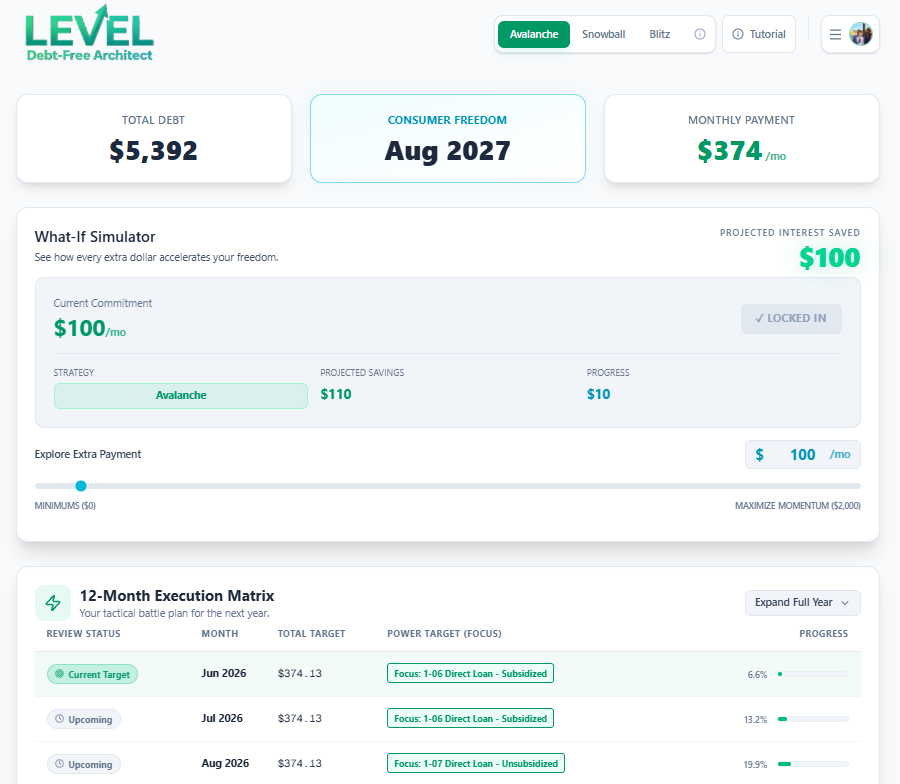
Figure 4: Tracking sequential debt reduction milestones across a visual 12-month construction roadmap.
Frequently Asked Questions
Does new purchase activity immediately increase my average daily balance?
Can I lower my average daily balance by making multiple payments a month?
What is the best tool to calculate my debt payoff and daily interest bleed?
Interactive Debt Architecture Engine
Stop letting the average daily balance method drain your cash flow.
Calculate your exact daily interest velocity and map your fastest path to zero with LEVEL Debt-Free Architect. Run side-by-side strategy simulations, test what-if extra payment injections, and engineer your 12-month visual blueprint—100% private, with zero bank sync required.