
Secured Financing / Risk Architecture
Collateral Loan Calculator: Secured Debt Payoff & Risks
When credit card balances climb into the tens of thousands and 25%+ APR interest charges begin compounding daily, many borrowers look for relief by turning to secured financing. But before using a collateral loan calculator to refinance your liabilities, you must understand the dangerous trade-off between secured and unsecured debt.
Every month, thousands of consumers search for a collateral loan calculator hoping that pledging a personal asset—a vehicle title, home equity, a certificate of deposit, or 401(k) savings—will grant them a lower interest rate and cut their monthly payment.
While secured loans certainly offer lower interest rates than revolving credit cards, they introduce a catastrophic structural risk: they convert unsecured debt into debt backed by your most vital possessions. Here is the mathematical truth behind collateral loans, how to calculate your true repayment costs, and why strategic cash flow routing often eliminates debt faster without putting your property on the line.
What is a Collateral Loan? (Secured vs. Unsecured Debt)
To understand the calculations behind a collateral loan, you must understand the fundamental difference between the two main categories of consumer debt:
Unsecured Debt (Credit Cards, Personal Loans)
Backed Only by Your Promise
Credit card issuers have no direct claim on your physical property. If you default, they can damage your credit score and attempt legal collections, but they cannot legally seize your car or home without a lengthy court judgment.
Secured / Collateral Debt (Auto, HELOC, Title)
Backed by a Pledged Asset
The lender holds a formal lien on an asset you own (vehicle title, home equity, savings account). If you miss payments, the lender has the legal right to seize, repossess, or foreclose on that asset to satisfy the balance.
The Core Question
Should You Use a Collateral Loan to Pay Off Credit Cards?
Using a collateral loan (such as a Home Equity Line of Credit or Auto Equity Loan) to pay off $25,000 in credit card debt reduces your interest rate from 26% down to 8%–11%. On paper, a collateral loan calculator will show you saving thousands in interest.
However, you have performed a high-risk financial maneuver: you traded unsecured debt for debt that could cost you your home or transportation. If you suffer a sudden job loss or medical emergency, an unsecured credit card can be managed or negotiated—but a defaulted collateral loan means repossession.

Figure 1: Comparing collateral loans against dynamic one-by-one debt payoff protocols.
The Collateral Loan Amortization Formula
Unlike credit cards that calculate interest using the average daily balance method, collateral installment loans use standard fixed amortization:
Monthly Payment (M) = P × [ r(1 + r)^n ] ÷ [ (1 + r)^n – 1 ]
- P: Principal loan amount (e.g., $25,000)
- r: Monthly interest rate (Annual APR ÷ 12)
- n: Total number of monthly payments (e.g., 36 or 60 months)
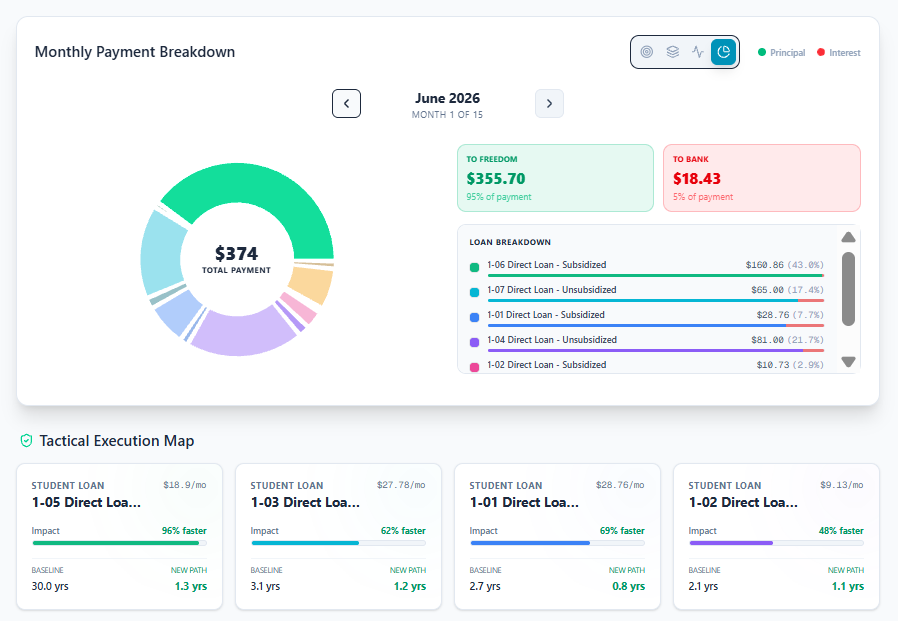
Figure 2: Visualizing how collateral loans lower interest rates, but create asset vulnerability.
Scenario Analysis: $25,000 Credit Card Debt vs. Collateral Loan vs. Dynamic Blitz
Consider a borrower with $25,000 in credit card debt across three accounts at an average 25% APR (bleeding $17.12/day in interest, as detailed in our guide on daily interest bleed). Here is how a collateral loan compares to strategic cash flow routing:
| Payoff Option | Interest Rate (APR) | Monthly Outflow | Payoff Duration | Total Interest Paid | Asset at Risk |
|---|---|---|---|---|---|
| 1. Credit Card Minimums (The Trap) | 25.0% Variable | $625 / mo (decreasing) | 22.5 Years | $21,400 | None (Unsecured) |
| 2. Collateral Loan (Auto/HELOC) | 9.5% Fixed | $798 / mo | 3.0 Years (36 mos) | $3,728 | Car or Home Pledged |
| 3. Personal Loan (Unsecured) | 14.5% + 5% Fee | $860 / mo | 3.0 Years (36 mos) | $5,960 + $1,250 Fee | None (Unsecured) |
| 4. Dynamic Blitz (Cash Flow Routing) | 25.0% Baseline | $850 / mo (Surplus) | 2.9 Years (35 mos) | $6,140 | None ($0 Fees, Zero Risk) |
Notice the critical takeaway: using a debt payoff calculator with extra payments to route an extra $225/month into the Dynamic Blitz Protocol clears all $25,000 in virtually the exact same 35-month timeline—without paying $1,250 in loan fees, without hard credit pulls, and without risking your vehicle or home (see consolidation loans vs paying one by one).
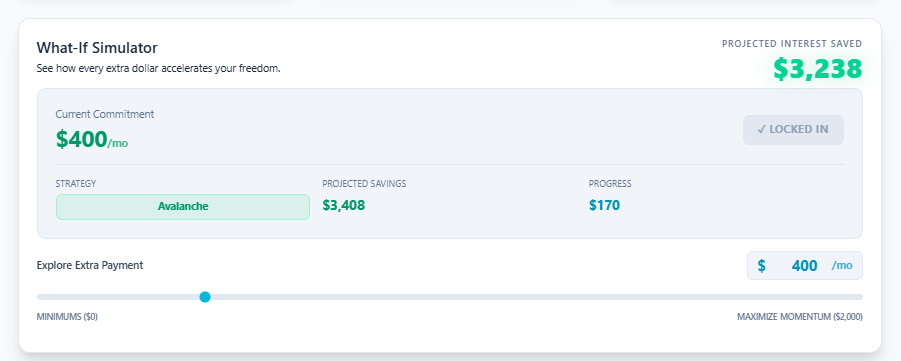
Figure 3: Testing what-if surplus cash flow allocations to eliminate debt without collateral.
3 Rules to Follow Before Pledging Any Collateral
Rule 1: Never Use Essential Assets for Consumer Debt
Never pledge the primary vehicle you need to commute to work, or the primary residence your family lives in, to pay off credit card debt accumulated from lifestyle expenses. If income drops unexpectedly, losing your car stops your ability to earn a living.
Rule 2: Avoid Predatory Auto Title Lenders
Auto title loans advertised on storefronts or online often charge APRs exceeding 150% to 300%. These are not consolidation tools; they are debt traps specifically structured to trigger default and asset repossession.
Rule 3: Model Cash Flow Routing First
Before taking out any secured loan, model your existing cash flow using the Dynamic Blitz protocol. As demonstrated in our guide on paying off debt with high income, concentrated payments eliminate high-APR debt rapidly with zero third-party lienholders.
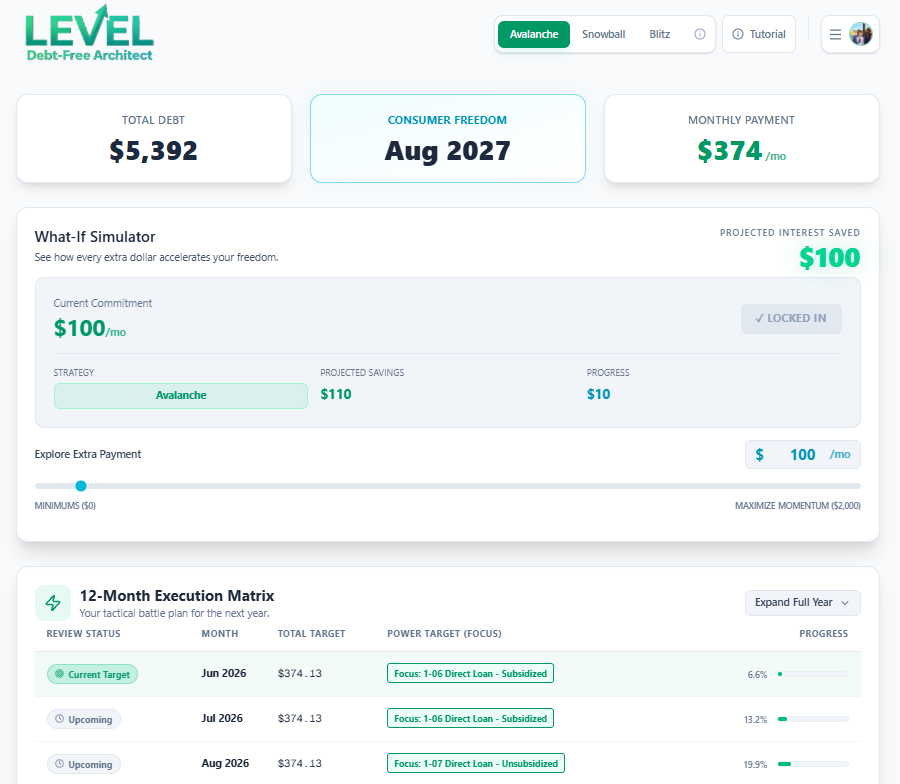
Figure 4: Tracking a 100% private, collateral-free debt elimination blueprint.
Frequently Asked Questions
Can a credit card company take my house or car if I don’t pay?
Is a 401(k) loan considered a collateral loan?
How can I calculate my fastest payoff date without taking out a loan?
Interactive Collateral-Free Debt Simulator
Don’t risk your assets. Engineer your cash flow to zero.
Before signing away a lien on your vehicle or property, simulate your options with LEVEL Debt-Free Architect. Test what-if extra payment injections, compare multi-strategy allocations side-by-side, and build your visual 12-month construction blueprint—100% private, with zero bank sync and zero collateral required.